
Science fiction and the future. Perhaps it is a mixture of the artist and the architect brain at work, but I like to have my science fiction include a high level of world building. The best forms of this I like to call “antiques in space”. This notion that we can still catch glimpses of our past in the future. Our current setting consists of us always taking what exists and building upon it, so our future should reflect the same. In the realm of major sci-fi franchises this would be in the vein of Star Trek : Deep Space 9 and how it took place on a former alien space station where human components have been added, but the structure remains alien.
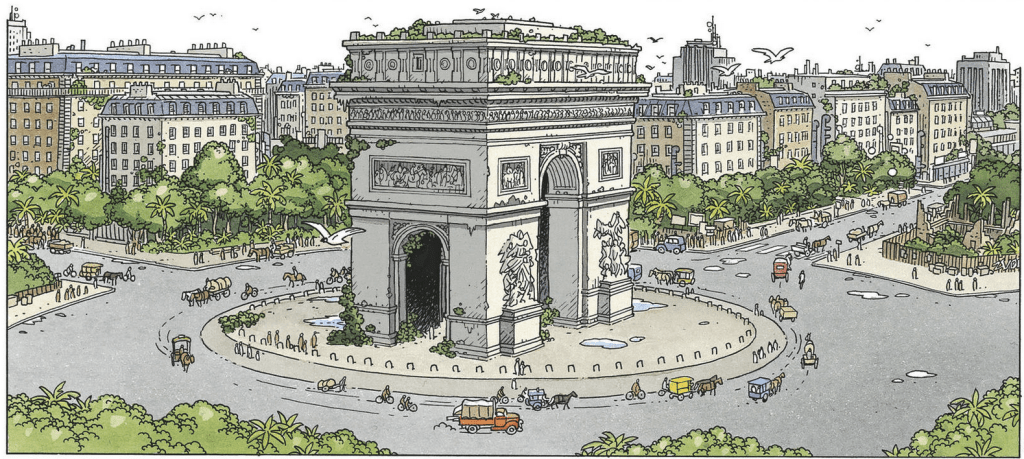
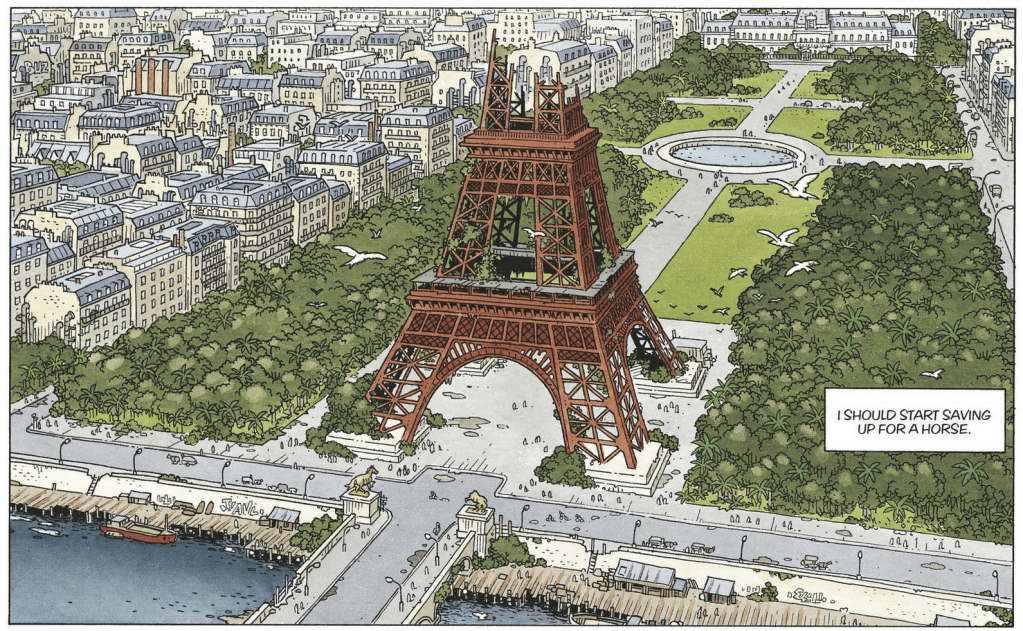
Recently I read a comic series called the Mermaid Project (2012-17, written by Leo and Corine Jamar). Set in the near future, it’s a spy story of secret scientists experimenting with genetic manipulation. The world building of the setting is what truly drew me in. It is an attempt to envision a post-Capitalist world rebuilding after WWIII and responding to fixing the climate crisis. The economic centers of the world have transitioned away from the Northern Hemispheres to give rise to a thriving Global South rich in raw materials. Gasoline production has ended to be replaced by methane generation from algae (a greener form than the methane harvesting of pigs from Mad Max : Beyond the Thunderdome), but the creation of methane can’t reach the levels from the days of gasoline, so the use of bicycles and horses has grown. Simple solutions from our past create the answers to our questions for the future.
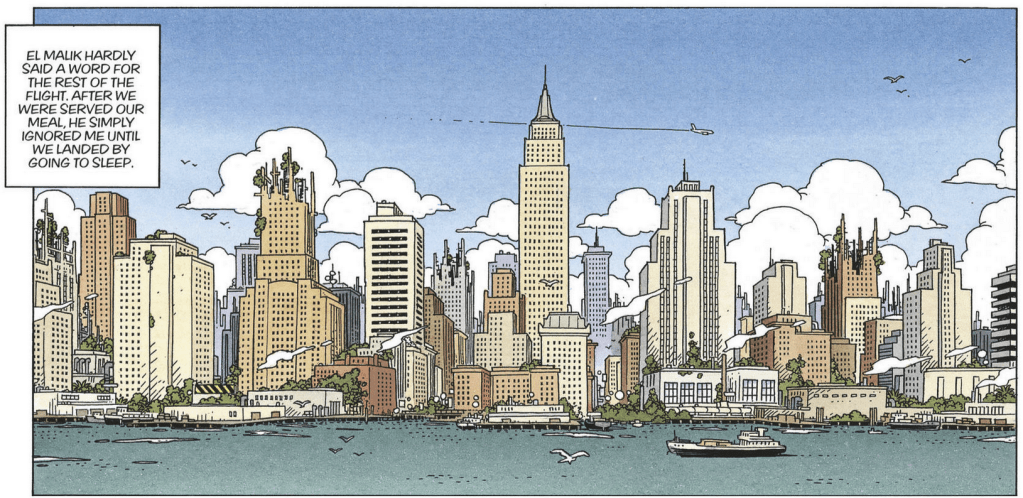
What this story seems to touch on with the setting is how do we design for a post-Capitalist future. – This is not a question I would recommend asking in an architectural theory course, or at least my profs didn’t enjoy it. – I think the response is that we need to think not in the terms of what would create the most profit to build, but what could last the longest while frequently modifying the form to suit changing needs. Late 20th C office buildings are running into the problem that we don’t need them anymore with the ability to remotely work, but the notion of trying to use them to solve the housing crisis creates a slew of new problems. They are plumbed to be an office, to break the building up into individual apartments would require people to accept that they would only have communal toilets or very extensive investigations with x-rays to determine where tensioned cables are or aren’t located within the floor slab. They also tend to be too large to have daylight penetrate deep enough into the space for apartments. As the article Too big ? Too small ? No, these offices are just right to become housing explains, the best existing office spaces are those mid-rise offices from pre-WWII as they are the most suitable to adaptation. Our architectural concepts of a modular design shouldn’t be restricted to creating blocks that can be copied and pasted, but also thinking about modular through future adaptations.
 High Contrast Grey.
Leave a comment